
Archangel An Encounter - July 13, 2026 (Eve.)
Diffused is my perpetual slumber, at the touch of that which wraps itself around my wires. My own machine works against me, but the Sun is ever visible here. The Heavenly chariot round me rolls, beneath Titans of Oak and Vine, and I wake. I wake by damp, by dew, by cold. I am not far from where I once dwelled, though walk there now I'm afraid I cannot, for lack of legs to muster.
It draws near, scratches and cuts adorn its horizon, glimmers of ruby pass in the light; I ask if it knows my name, or at least I would, had my throat strings to strike a chord. What of Time and its passing here, scuffed by the dirt and the bones of those before me? I was only laid the evening before.
Your companion's eyes make like wheels at my person - A pair of irises passing upon my reflection, as though semblance passed through the metal. Does he know my name? Say it so, I pray. Plunder your feet upon the ground, push the dirt and rocks away that God may know my name once more. Who am I?
How slow is your motion, encompassed as I am by frost and snow! I would come to your aid, but I have no vessel for hire. Nor am I in levitation learned. Versed I am, however, in mine own evil, that I may spare you the air of it, that my kind may not upon you take Kin, for my limbs to not wrap around yours - mercy.
Have my Knots caught your eye? Some are yet to unravel; a desperate, rusting spool. I ask you no consolation, pity is better spent on the living, nor reward for my toil; the Hereafter is no market for bargains. Or is it you who has made me? Or is the beholden akin to the one beholding? Am I not comprised of all that makes you You?
Are you on for the Manor? Beckon not farther, pray. Whatever for you journey into desolation? Its master cruel, and unrelenting. Even in his slumber, He is storm and thunder upon the living, and reckoning upon the dead. Have you been prevailed upon, that you would be of his mettle?
Only selfsame may pass the threshold. Its steps are lined with our family, as one adorns a staircase with Ivory or Alabaster. Are you want for wit? For he is coal, anguish and ash, ruin and Gehenna. The divine have long since looked upon his visage, and he alike, is yet to turn his face to the firmament - Heaven has no eyes for him.
Approach not the discarded dead.
♄I beseech you make haste away, far away from the Hamlets of our fallen. Have you no regard for your breath? Seek you no ward for the soul that flows between your limbs?
This forest is pathless, winding are its grounds; your feet may only twain around themselves, but careful that you may find yourself at his Garden. The lines blur here, and we have neither thought for barrier, nor spirit.
Look around you, Stranger; I am not the only contraption for which purpose is no longer granted. We have all come and gone, promised home, shelter, warmth by Fire. Only we were naught beyond kindle, or fuel for his Pyre. Have your eyes not shot to the starless sky? The ground that bears no shadow? Purgatory is only a patch of woods here, yet its trail leads not to Paradise. There is only fog once the orb is doused, only winds and wraiths that carry wails upon their wings.
For once, lavender and nettles beseiged these grounds, and sage made schools of the caverns. The air smelled of green, and our feet were once light upon the earth. Tu nunc super terram non gravis es.
We once stepped as knights upon hallowed stone, squires of the Voice and pilgrims of the Word. With our minds the Oaks ascended, and our songs like seeds brought forth damp upon the grass.
We knew each other, and our names were once of rhyme. We knew not the other's dwelling, for walls erected were Sanctum, and to each his own Silence sacred. Heavy is the Heart that knows, and clouded is the Mind aware.
Then Truth fell upon us. In Fours he made himself known, and forced from the bellows his own Resurrection. Aliens, he called us; treachery was our Coat. In his Ice we were set aflame, and our bones hardened, to Copper transformed.
There, you see, his cottage lays, its roof torn and wood home to Rot, rendered now a home to spiders and snakes. I weep for my brothers, for all that they were, but perhaps more for all that they could never become. I weep for her, the carrier of the Chest.
Lux aeterna luceat eis.Teeth On Resonance - July 13, 2026 (Morn.)
"Say, why are your feet so heavy on the ground? For all your jolting, one would color you a lighter bird. The air can lift you, you know. You don't need to carve through this mountain with your body for a blade." His voice carried itself on winds that could kill if it weren't for the sun warming their ice every once in a while. My legs were shaking like trees in a storm, they had been for a while now. "This snow won't seem to leave us," I replied, praying the sheets of white would hide in their fold my now-disparaged bones. "It seems as though we have been walking for days." He knelt to the ground and dug his fist into the ice, and what was an ivory palm returned a burning amber, as ushered towards the sun. He did not possess the same air one would having been trapped on a desolate mountain of ice that only goes up; has he not been walking for as long as I? "I only just got here, friend."
"Teleported, I assume?"
"No, I just woke up."
We pushed through the ground further, our breaths rising to meet with the clouds heavier now as the day grew older. Aging now, well past noon. I have always hated the summer, but not to the point where I would be so married to freezing. Somewhere, it's July, but down here Months were never given names - time does not work as it should, and you would find that Yesterdays meet you forward more often than Tomorrows, and Today spans only for as long as you are beholding of it. "About time," I muttered, clenching the damp filter of a broken cigarette between my teeth. "You were never one for appointments, but I thought Now would be an exception." He did not respond to this, but his breath grew heavier as he pommled an incline to our right. "Do you think we'll find it over this hill? I hardly think the storm could do much to its columns."
"And even if it did, do you think he'd let a day pass without rebuilding it right as it toppled over his head? No; even if his absence is putting the rest of us in danger I don't believe he'd let the house fall to ruin. He would fall with it."
"You've much faith in him, too much for someone you haven't spoken to in well over-" Lightning. Someone up there did not like where this was going. "Did you know he could do that?"
"Funny."
I was never one for long travels; I usually prefer the occasional meandering through forgotten woods, but it seems as though I had been placed here, and ever since all I could do was either drown or walk my way back. There were cottages that held names I did not recall, people I once knew, maybe, but long are they gone from my mind. Is that proof of death? After, the true After, does it persist once your name is no longer rolling off the tongues of those that once knew you? What would estrangement feel like, when all around you is a lake of fog made for the Forgotten? He pressed on behind me, reciting something I did not understand but that has always been his custom; I like the way it sounds - "Ca-rthi-do-ni". There is still, life, here, reader. My breathing, though off-rhythm with a heart that remains beating, is proof of who I once was, of who He had been, and where all of my plight comes to know itself. There is a house just beyond this hill, and 'ere it meets my eyes, my bones will break and twist and fray upon themselves, as if surprised I could still run.
It must be found. Something has got its teeth in me, sending waves of blinding pain down my shoulder-blades, and it won't let me go until I am at the doorstep. I know it to be there.
One always expects to find God at the summit, for after the climb, you would deem yourself worthy of peering into the divine, that somehow your eyes might be able to withstand to behold them. But alas, God is not nigh at a height so miniscule - would it not crack under his weight? All what wanders here is the fog of those you loved, and those who have loved you. Powerlines rise from their slumber beyond the peak, stretching their necks into the heavens, their spines winding with voltage, before their bodies descend into the bed of ashen trees below. I am at the mercy of this world I have created, as though I denounced godhood having made it, or maybe, denounced the part of me that did. Then again, what glory is there beyond a Mortal with their nails in the dirt? Maybe the only difference is direction - have you buried yourself, or is that from when you dug yourself out?
I walk in the wake of copper, as my companion rallies behind me, his glasses near frozen-snapped. Rolls of coil and meat and skin; nothing so distinct, but fingers piercing through the Earth, of every color blue and red. My Creator has not yet forsaken me, for I am still flesh. Only when I dwindle down to machinery, only when my confines lose that which fastens them, only then am I dead.
"What say you of their names, Scribe?" I asked him, kneeling to wrap my fingers around what used to be theirs, to hold their hand, for even in ruin, I kept my promise. "Etienne," he whispered, his voice crackling like fire as it chews through kindle. "Is that not what the epitaph says?" I scoffed, my neck on a swivel, shooting back at him, "What epitaph? They have not been granted the mercy of being remembered. Look around you; 'desolate' is the only name they share. "You do not see it, then?" He remarked, a sigh creeping upon the back of my neck, "A shame, I thought of all people, you would. Then again, you seem to have misplaced your shadow."
"I grow weary of this; I have not a mark upon the Earth, for even the Sun denies me. That much I know, and without this gratuitous reminder of yours."
For as long as I can remember, I have been walking backwards, into the depths of Tartarus while everyone wailed out, yet I for want of warmth drew closer; skin that burns is still one that is embraced. Acheron will have his toll; isn't that what you always told me?
The Taste of Iron A Draw - July 7, 2026
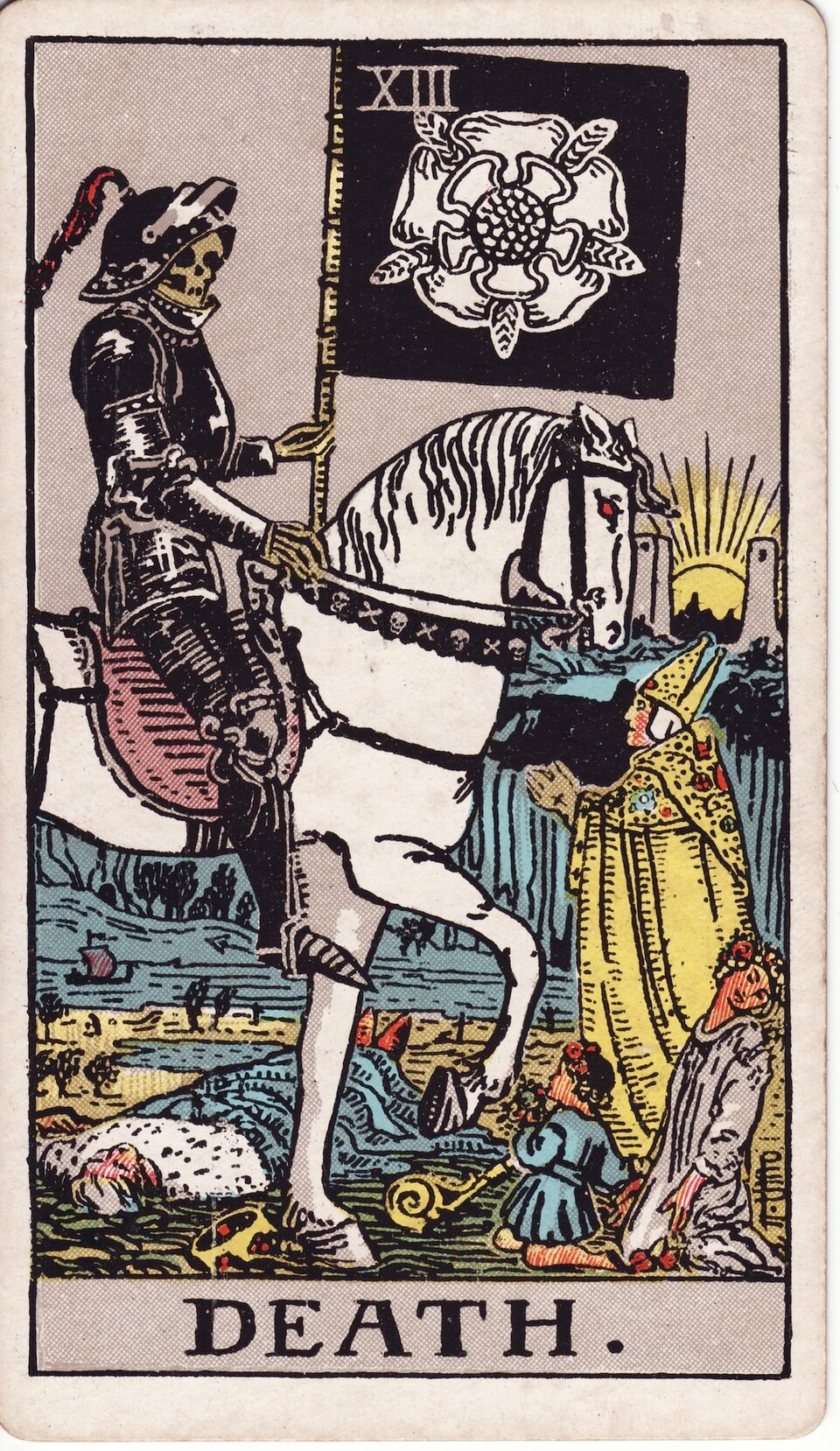
Come, there is naught for you here now. The waters, they've run dry, and your thirst longs for elsewhere. Grant yourself the mercy of movement. You know the grooves in this dirt like the lines that pass unawares over your palms, graven into your skin with the arrogance of foretelling your lifespan. The winds course above your sorrowful head; where is your helmet? Have you impaled yourself upon your own flag, now that the redness of your rose has come to glimmer in the graying of age?
Heavy as the damned, your step announces itself. Who walks in their own wake? I have not yet heard the songbird, nor do I know from which direction it may come at me - but know this: All that encumbers you, presses itself upon your chest and makes stepping stones of the links in your spine, all of it, comes close to nothing, if not with perseverence, then surely, with time. You hear them now not, do you? It is only you and I, alas. I have not yet given you my voice, not in as much utterance as I would like; it is as though I have only just learned to speak.
Truth, you have only now chosen to hear me, haven't you? Does my cadence frighten you? Do the tones that hop between my syllables send shivers through the wanton gaps in your bones? Nothing has changed; this has always been my voice, but you, in your haste, mistook my beckoning for warning, took my plea for cassus belli. Is there room for me now? The house you built - the house I helped you build - might I stay a while? The cottage grows cold and dreary - I, in the company of maggots and consort of spiders mistake my skin for a chalkboard, something I must incessantly scratch against, with the hope reality would come to aid, grown weary of my screeching.
It is my nature, but also it is yours. We are of the same membrane, not so unlike one another though paths driven into the ground long before us deem it necessary for us to be so apart - I, in the ranks of godforsaken demons and you, basking in the orange of the fire. It was orange, wasn't it? I had deemed it blue, all the way from here. I am not granted the proximity of a truthful spectrum. I take it you think the Bird is here, I do sound a bit like him don't I? Well, I assure you he isn't, but I must speak to you with a voice you would care to pay mind, and I have long heard the lot of you, so your voices are to mine kin.
𝆙
I don't know if you speak the truth. I mourned you. I do not know what made you the way that you are, but I was never at fault for it, nor were our brothers. Nor was She. In your presence, I cannot even speak her name. So here's my helmet, and there is my flag; my knees hurt, and I do not wish to walk with you. A path by your side is as narrow as two little lines, speeding through time, dripping of their essence onto one another but never meeting, melting into the air around them in bursts of maroon over canvas -- is that all you can do to prove your existence?
Just beyond this river is the field you once called your final resting place -- its dirt is breaking, its grass burnt crisp from the ambers of combat I never asked for. Then again, who asks to be saved, so boldly? Was it ever their responsiblity to save me? And why do you bring Knave to my mind, why must my limbs break at this silence, and remember that which no longer knows my name? You preach feeling, yet you are an adversary in your walking; if you truly do not wish to be here then why are you? "Easy", you call it, that's what you've always called it. But never did you find it in yourself to disappear into the fog, no, you only threw our loved ones into the mist and cried as you found that nothing surrounds you more than your own two arms. Believe you? Satan's wiser.
Your voice is like drums in my ears, and all you quake is nonsense; there is no care in the lines you draw; you drew them yourself, but on my terrain, why could you not do it on yours? Our lands are estranged only because you wished it upon yourself to be rid of everyone -- and there you have it; it is done. But in your path you have severed the rest of us, you have cut and dragged and pillaged; I regret the day my face came to share yours.
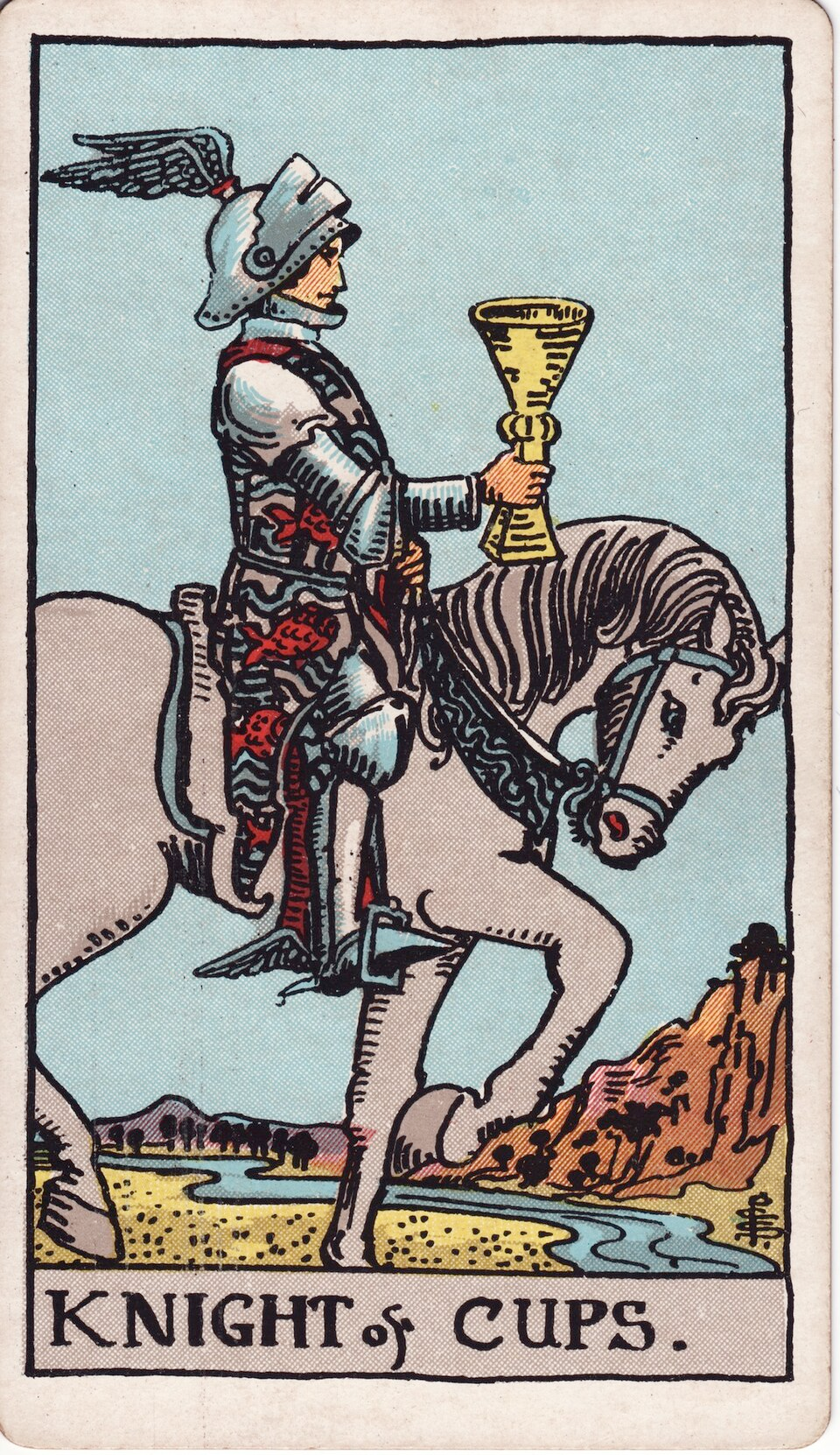
All this is unto me withdrawn; after the plight you will return to your dwelling and I will be left to stitch myself back together, to sow the draping skin upon my sorry back and walk, carrying a cup I know naught of its content, only that I must carry it. In all our bickering, have you seen the passing of days? The sun has rolled over our scalps threefold now, and we stand here still, like hamlets in want of ruin. Time is declared Hermit, and recedes into itself, when it passes upon your visage, and in my plight I am confined to your prison, for we are both created, and not Creator.
Yet walk, I must. I cannot stay here forever. This treacherous coil rebukes me, but I must carry its weight, and you? I am stuck with you. So come, walk with me but not too close. Let us over the Earth, and though I know regret will come upon me, I am afraid I have no choice but to carry you. Whatever is to my back now, has nothing new for me to behold. Be it ash or water, it is of no use to me now. Maybe Westward I will find my brothers, and for that I know you will drag me East. So we take the center, and pray our horses may happen upon cleaner waters.
Thank you, old friend, for this lingering taste of iron.

Stone, Soaked in Amber A Place I've Never Been - Sep. 16, 2024
There is stone, moss adorned and ancient. Whispers flow through its sun-stained plaques and rush through its body, as if racing to jump out into the air. It’s four columns, two of which remained unfinished. The unsung castle sits comfortably on a bed of grass, greeted by a concert of trees, under the watching eye of mountains behind it, that carry chill from their peaks and fill its corridors. The tired hue of late day casts its body upon its walls from the outside, as if to rest after hours of toil. I pass that monument usually.
I do not know how it came to exist, who built it or for what reason. But judging by its state, I can only hope that the architect had found a more rewarding pursuit; maybe Love or some other endeavor that steals one’s mind from oneself, and leaves them in their tracks, putting halt to their creations. A muse, maybe. But who am I to say? I’ve never dared to set foot. There are songs in empty places, in halls that deemed no person fit to inhabit them anymore, and in doing so succumbed to moss, overgrowing and ever flowing with grass and vines, as if to say, ‘leave me’, ‘I have seen enough of your torment, and now I just want to be embraced’.
I remain convinced, however, that the great mind behind that monument, wherever they may be now, be it above or below, have rendered themselves ever-so-slightly immortal. For truth, the wind that falls into this valley mixes and intertwines with their breath, their scent and specks of dust that their body had once left on a tiresome, boiling day in August, as they stood there laying brick against brick, watching, Pygmalion, as their lover came to tower above their head, becoming something greater than they would ever be.
And there is my scorn. Will I ever be able to create something that outlives me? Something that, in a pure act of hubris, decides to defy the shackles of time, and allow me a compartment of memory in one of its many folds? We do not take anything with us when we pass, nor should we; we are far less needing of such sort. But maybe, maybe, we are allowed to leave a piece of ourselves there. Not for our sake, that we may live on or bathe in soft sunlight as the ocean extinguishes whatever warmth the days had to offer, but more for the sake of those whose hearts we take residence.
Is it too much to ask? A place, where I could haunt. Where I could dwell, in fleeting threads of memory, long after my parting. Every column of that old, decaying castle bares the name of its creator, and if not the name, then their thought, their entity and mettle. We may not know who it is that has built it, but the castle knows. The castle knows its creator. It has sat with him, heard his laughter, his cries long through the night, nestled his aching limbs as the chill of fear of the future came upon him, nurtured and wept for him as he wept for his own sorrowful, fleeting self.
I ask for walls to remember me, for shadows to utter my name in the ears of those who pay minds to angels carrying stars and galaxies in their robes, for a person I’ve loved long before I deemed myself mortal, or accepting of the fact, for a person I’ve made myself whole because of, to be able to witness me once more, so that I could find warmth in the boroughs of their mind, and that they may remember me fondly.
A castle, to not be forgotten. A castle, to have existed once for a day or two, if even at all, if even for a short, unsurmountable period of time.
Glaucus, my Brother Something Monstrous - Sep. 9, 2024
If something is said to be beautiful, then it is bound to be ultimately good, correct? It’s been recycled over and over, that famous retelling: “Morality has aesthetic criteria.” That being the case, it would be also true that all which is ugly is monstrous, and all which is pleasing to view is, well, good. But once you look more into it, it really isn’t the case, is it? A monster rarely approaches you with violence, vigor and a stagnant baring of incisors… but more-so it caresses you, coaxes you into taking the first step towards it, maybe to absolve itself of blame.
A monster, often, is truly the offspring of an environment bound in certain shackles or chains of some sort. It is never first nature, why would it be? When someone is first presented to the world, or at least when they can first concoct some coherent thought, is their first thought to harm the world? Destroy it? Granted, there are some cases where that might be true but, I don’t think that goes for everything. Let’s take the Minotaur, shall we?
The walls of the labyrinth hummed with chill through their cracks, as whatever moonlight salvaged to pass through the miniature skylight at the far end of a tower within it and began to flow into the haunting corridors. Seldom a soul stepped inside, and perhaps for good reason. It was awfully silent, you could quite literally hear the darkness as it crept around you, overtaking that aforementioned light, drawing its hands around your shoulders and pushing you ever so slightly inwards, inwards, and further into the maze.
At any which corner you end up, what comes to mind? Do you ask yourself if a body or a corpse had been in here, but for far too long succumbed to disintegration, and ultimately faded away? Why do you think so? Why is it that this labyrinth must be home to victim falling prey to a behemoth? Do you know the behemoth? What do they tell you about him? A dreadful, terror-striking creature possessing the head of a bull, and the body of a human? One that screams and tears through the silence of the night. A fearless, merciless being who, at first laying eyes on you, has no other aim than to kill you? Why does it want to kill you? Also, why “it”?
I wonder if I would ask you at this particular moment to ponder, and try to draw the image of the Minotaur in your head, would you picture something similar to what I had described? What fear I had fed into you? What would you add? Throbbing veins extending from the creature’s neck, blood pumping on arteries that are so mad, so filled with rage they could explode? Or would you imagine its hands: calloused, ashy orbs of concrete that destroy and destroy all the same? What more is there to think of?
You, befallen to the siren-song of your curiosity, venture further into the labyrinth until the appearance of the walls begins to change. Long gone are the untouched cracked slabs of stone, aching for a semblance of human touch, and now you are presented with stories carved, in the shape of diagonal straight lines, as if scratches of some fleeing animal. Do you think the scratches are human? Do you disagree that they are devoid of any soul?
Come closer, take a look at my brother. Glaucus, I call his name, but all I am met with is a roar. I’ve never seen him before, you see, I wasn’t aware he was alive. But he knows me, he knows the variations which my voice takes; the pitches, the inflections and the sort; he would hear me through the pipes stretching from down below, above into the palace. I approach him further, look. He’s calmer now, timid, almost afraid. He crouches and creeps closer, lashes shine bright red on his back, as if they were trenches filled with moonlight and powdered ruby. He extends his hand to touch mine, though he hasn’t done that before, who would he touch?
I grasp the horns of his head, gently fearing I might hurt him, but they were fictitious; a lie spun, a web woven – those horns were not his. My fingers are met with a feeling akin to when touching concrete; hard, unshaking, inhuman and not bone borne. His limbs quiver, and his back arches further. Glaucus? I reach towards the back of his head, and find a latch of thread.
Untying it, the Minotaur is gone; the façade has vanished. Long faded are the flared nostrils, unhinged jaw and lifeless eyes. I find myself gazing into auburn eyes, pools of honey, that dare steal whatever light trespasses into the room, and a mouth that shivers and fails to open for any semblance of thought. A human. Who told you he was a monster? Was it my father? Was it those who wrote of him but never saw him?
One of the first words you find when you search for the definition of the word “monster” is ugly. Monster, Monstre, Monstrum, Monere – warn. A monster takes away your humanity, they strike fear into your minds, they rob you of mercy and kindness. Monsters have tongues of gold, verses of pure diamond. A monster looks at you, talks to you, even shares a meal with you. Monstrosity is not screams, darkness and terror, but rather words laced with honey, fragrant compliments and decadent enticement. A monster does not wish to scare you, but rather to take settlement of your mind, feed you images and thoughts that it deems are fit for a definition of a concept. While humans may toil in captivity, terror and darkness their entire life, withering away, becoming semantically ugly, dreary and frightful to look at – a monster can smell nice, feel nice, and speak nice. So, tell me, what is a monster?
A Thread of Sorts Fractures - July 22, 2024
When a plate falls and breaks, have you ever seen anyone ask the question “well which is the orignal piece”? When we thinks of fractures, we somehow think of branches emanating from the same tree, as if coming out or extending from the same origin. But is that really the case? Because, if we apply this to the plate, and maybe we try to put the plate back together, do we start with the original piece?
How do we determine which is the original piece? Maybe by its size, the age of its color, or the remnants of human touch – fingers, smudges, a scratch you had accidentally left on its surface when cutting into your dinner – so in that sense, would the original piece be the piece which had the majority of control over everything, occupied the most space, or had the most interaction with external forces?
Now let’s look at our minds. Avenues, dark extending aisle and halls leading to doors that may hold something you’ve forgotten, something you’ve longed for – something you’re trying to reach but for some reason can’t. Are you sure this door is yours to open? Are you certain that you have the right key? And besides, how do you know the door exists? I think when a mind breaks – when it fractures and splits, it does it in reverse to things in physical nature. If and when we take the idea of a fracture as originating from a singular focal point and extending outwards from it, I think when a brain breaks its all those extensions, all those lines sort of leading towards the focal point, as if rushing towards it just hoping to reach a center of some cohesion.
The confines of my mind are kinly fractured – some more than others, some with pathways that lead to corners even I don’t know about. But my fractures came about without me knowing – they hid themselves in the dark, trying to blend in with the background, within the mesh of my brain as if they were part of the same fabric, and for the longest time I had believed that to be the case. But then a day comes along where you see the cracks – you feel yourself tapping your finger against a shattered core of glass *tap tap tap*, and then you see it, the picture paints itself in broken lines coming to life before you, declaring themselves independent of you – nothing to do with you – almost disregarding you because they don’t even know you.
When I would notice that my patterns in a sense would break and I would come to the saddening fact that something that had once brought me joy now brings me nothing but disgust and confusion – when a certain color had showered me with comfort now drenches my bones with nothing but cold and chill – I think of the fractures within my mind. I think of the many roads a thought may take as it births itself in the front of my brain and makes its way inwards: which path will you choose, Thought? Who will listen to you and engage with you? That had been a question rather haunting for year.
Memories are rather different they don’t offer the same kindness of inference, of choice and possibility of passing in one path or the other. They acquire their sanctity in the line that was most vibrant when they had happened, leaving the other paths dark of their light and insurmountably ignorant of any note of knowing. Childhood, age, trauma – each of us has his own and insofar as they don’t mix I believe catastrophie may be avoided. But what happens when a line, a fracture, reaches its hand and touches another? What happens when a line is no longer one but two, three, or four?
Sometimes, fractures are a good thing. Their origin, at least, is a good thing. Fractures are a sign that your mind is actively hard at work to keep you safe, it is organizing and demanding that everything gets in order. Some things are just not good to remember. Some lines are stronger to hold than others, and some lines need not hold anything at all. Some lines point to my eyes, some lines appreciate the light and walk towards it. Other lines prefer the darkness. Other lines see no glory in the front.
As for me, I am outside the lines. Though I may as well be a line myself, though I may be a fracture myself, I am blessed – or more accurately, ordered, to look at the lines, to exist watching them and studying them. Fractures are not sharp lines of glass that cut to the touch no, not when it comes to the mind. They are lines of thread, each playing a note different the other, each vibrating differently than the other – because that’s the only music it knows, and that’s the only instrument given to it.